
While most fusion companies chase next-generation power plants, SHINE operates fusion technology at industrial scale now. Our fusion systems sustain record steady-state neutron output. Our radiochemistry capabilities separate isotopes with speed and precision.
As a result, we’re delivering value to customers while establishing the technical foundation for commercial fusion power.
Here are the technologies making this possible—and the innovations paving the way to a fusion-powered future.
High-current particle beams strike a tritium gas target, producing an intense flow of neutrons that can drive a range of applications, from isotope production to radiation effects testing to nuclear waste transmutation.
We design, build, and operate these systems in-house through our Systems and Manufacturing team. They integrate particle accelerators, fusion targets, and radiochemical processing into equipment that runs at production scale. This combination of fusion physics and manufacturing know-how is what enables us to deploy fusion commercially.
By putting this technology to work in real markets, we’ve gained significant advantages:
Lowest-cost neutron production, achieved through optimized target design and accelerator performance.
Advanced radiochemistry that converts target materials into high-purity medical isotopes for global markets.
Hard-won nuclear operating expertise in licensing, safety, and manufacturing—competencies that build the foundation for future fusion power.
Two rare strengths combined: high-intensity fusion neutron generation and advanced radiochemical separation.
Cancer care and diagnostic imaging depend on isotopes that the U.S. has long imported from aging overseas reactors. To strengthen supply, we’re building next-generation facilities to produce these vital isotopes for patients and providers worldwide.
.jpg)
Our fusion production platform will make Chrysalis the world’s largest source of molybdenum-99 (Mo-99).
By producing these isotopes at scale with fusion-driven systems, we’re demonstrating how our technology can make medical supply chains more secure while supporting patient care globally.
The Nuclear Regulatory Commission is licensing Chrysalis under its Part 50 framework, the same rigorous code used for nuclear reactors. It’s the first advanced nuclear facility in decades to be approved through this process.
Advancing the radiochemistry expertise developed through our fusion work, Cassiopeia produces Ilumira, our 99.9%-pure, non-carrier-added lutetium-177 for cancer treatments.
Ilumira’s high isotope purity enables more precise, reliable dosing that supports safer, more predictable care. With growing partnerships, we’re supporting clinical trials and treatment programs worldwide.
.jpg)
From aircraft engines to semiconductor chips, mission-critical components must be proven safe before operation. We’re delivering the proof at an industrial scale.
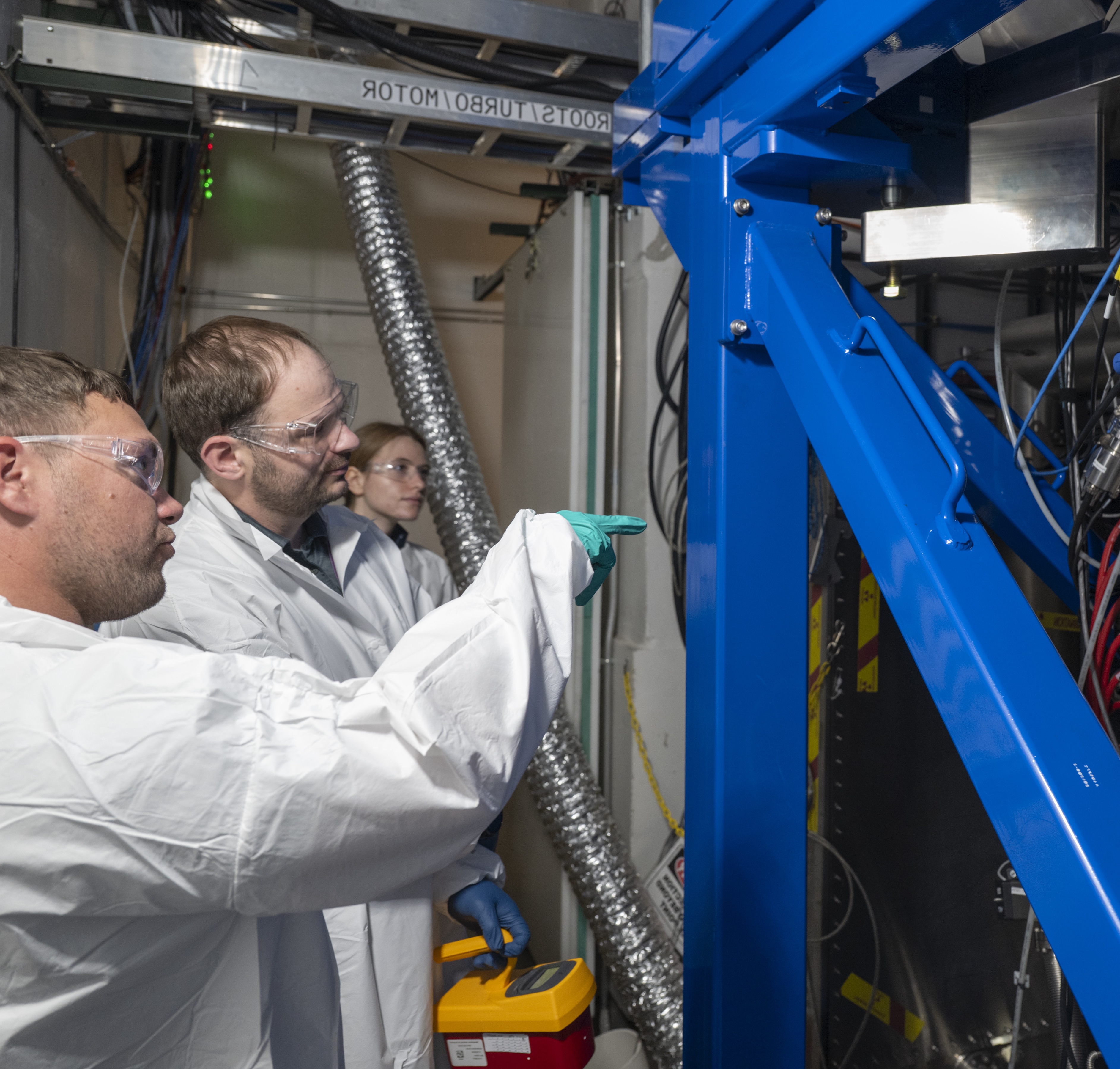
Built on our core fusion technology, FLARE is a service that tests and validates materials for aerospace, defense, and advanced energy applications. Launched in 2024, it delivers steady 14 MeV fusion neutrons—the same conditions materials experience in nuclear and space environments.
FLARE quickly gives customers the data they need to design and qualify mission-critical systems. Early contracts with the U.S. Department of Defense and leading aerospace companies highlight its emergence as the new standard in radiation-effects testing.
Built on the accelerator technology that underpins our fusion platform, the Phoenix Imaging Center has become the nation’s premier neutron-imaging service provider for aerospace and defense customers.
Operating since 2020, it uses thermal and fast neutron beams—with CT capability—to detect flaws invisible to X-rays.


Grounded in our fusion-based neutron technology, our fuel-scanning systems help ensure the safety and quality of nuclear fuel before it ever reaches a reactor. These systems use neutrons to see through materials too dense for X-rays, verifying that each fuel rod meets exacting standards for structure and composition.
Equipment designed and built by SHINE has inspected nearly half of the fuel rods operating in the United States—a clear demonstration of our precision engineering and performance at scale.
We’re applying our fusion and radiochemistry expertise to one of energy’s biggest challenges: used nuclear fuel. Our REDUCE process aims to recover value from spent fuel, a resource that still contains most of its original energy.
Supported by the ARPA-E program and leading industry partners, this approach could redefine how nuclear waste is managed.
Recover Value: We aim to retrieve uranium and plutonium that can re-enter the fuel cycle as new fuel, potentially recapturing ≈96% of the mass now treated as waste.
Reclaim Materials: We plan to isolate valuable elements such as strontium-90, rhodium, and americium-241 for use in medicine, manufacturing, and advanced-energy systems.
Reduce Waste: We intend to use fusion neutrons to transform the small remaining fraction into stable or shorter-lived forms, reducing storage needs from millennia to decades.
Fusion energy can deliver nearly limitless, carbon-free power without long-lived waste or meltdown risk. Our fusion systems already apply the same physics and engineering principles that future energy sources could depend on. This is how we're building toward clean fusion energy at industrial scale.
.jpg)
Artemis powers FLARE, our radiation-effects testing service. It produces 14 MeV neutrons, creating the environment used to test and qualify materials for fusion, defense, and space exploration applications.
%20(2).jpeg)
Apollo is a twin system developed for the United Kingdom Atomic Energy Authority to support tritium-breeding and blanket-design experiments—key technologies for achieving self-sustaining fusion fuel cycles.
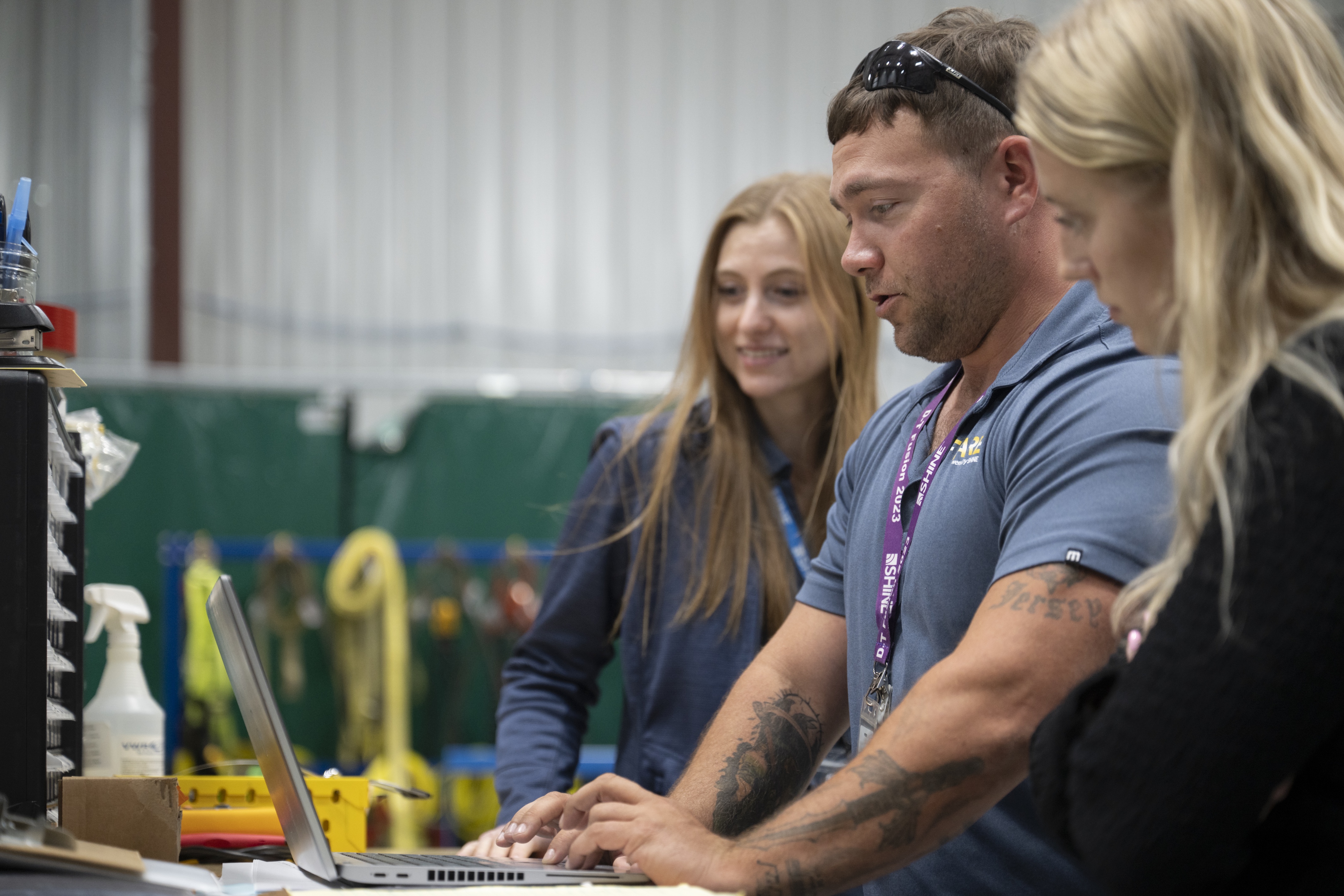
Our internal research and collaborative studies focus on increasing neutron intensity, improving energy efficiency, and advancing tritium-management and materials systems—all aimed at preparing our fusion platform for future energy production.
Our technology isn’t a distant vision. It’s saving lives, strengthening national security, and advancing the science for making clean fusion energy possible.
Fusion can deliver value today, generate long-term growth, and help build a new energy economy for tomorrow.


