TECHNOLOGY THAT SCALES
Building fusion’s future through commercial technology
SHINE deploys fusion technology at industrial scale. Our systems solve problems today and build the experience needed to deliver commercial fusion power tomorrow.
Our Systems
Designed to improve with every iteration
Rather than relying on a single technical approach to fusion, we’re advancing a shared set of technologies: fusion science and technology, and separation science and technology. The first covers how we produce and apply fusion reactions, as well as how we build systems to do both efficiently. The second includes the radiochemistry and isotope enrichment needed to separate valuable materials and create enriched starting materials. Both are essential to our product portfolio and critical for fusion energy.
Driving down fusion costs, increasing output
Since our first product, we’ve cut the cost of each fusion reaction by more than 10,000x. Plus, as our products advance, thermal output is growing from milliwatts and ultimately to megawatts.
Taking separation science further
Each new application demands more from our separation technology. We started by separating high-purity medical isotopes. Now we’re tackling more complex radioactive mixtures at a much greater scale.
Accumulating commercial nuclear experience
Since 2010, we’ve designed and built fusion systems, radiochemical production facilities and nuclear technology infrastructure while successfully navigating NRC licensing.
PRECISION TESTING TECHNOLOGY
Revealing what other testing methods miss
Neutrons can show what X-rays can’t. They can also simulate the intense radiation environments critical components must survive. We put these capabilities to work across a range of testing applications.
High-output fusion testing
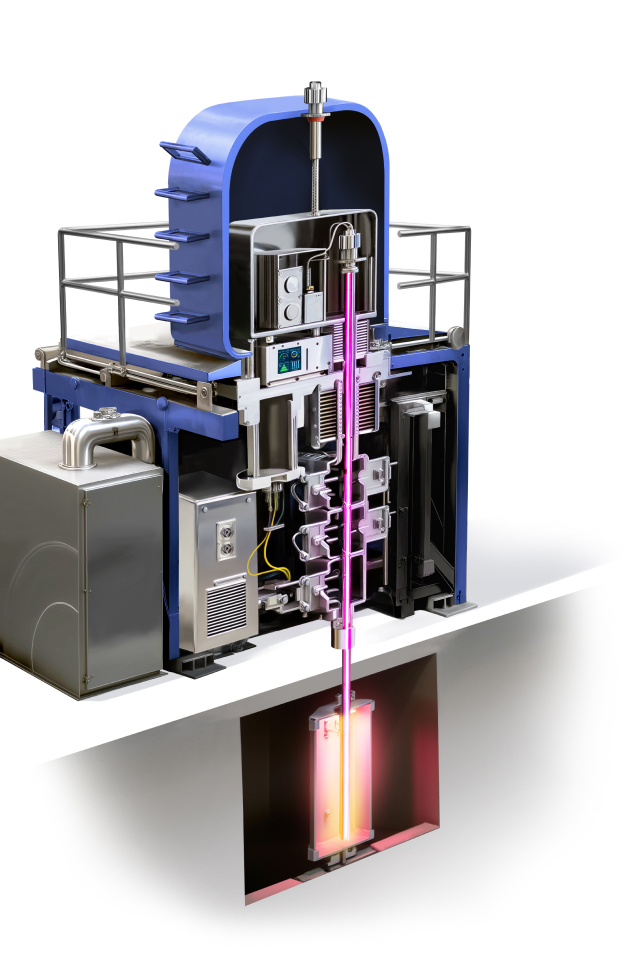
For radiation-effects testing, we put fusion directly to work. We use high-energy particle beams and a tritium gas target to sustain 46 trillion fusion reactions per second. The resulting 14 MeV neutrons let customers test materials and components for the demanding radiation environments found in space, defense and nuclear applications.
Neutron imaging & inspection
Our neutron imaging center uses neutron radiography and computed tomography to see inside dense components and reveal flaws X-rays can miss. We design, build and operate the technology ourselves, giving aerospace and defense customers access to a modern alternative to aging research reactors.
Nuclear fuel inspection
Our neutron-based fuel scanners see through dense materials to verify the structure and composition of nuclear fuel before it enters a reactor. SHINE-built equipment has inspected about half of the fuel rods operating in the U.S.
Fusion technology with expanding uses
Our fusion technology can be adapted for very different jobs. We’ve deployed multiple fusion systems, with some operating continuously in the field for more than a decade. Artemis, the fusion system that powers our radiation effects testing, produces steady 14 MeV fusion neutrons. The same core technology will drive isotope production at Chrysalis. We build systems for others, too. Artemis’s twin, Apollo, is being prepared for the UK Atomic Energy Authority as the neutron source for LIBRTI, its tritium-breeding research program.
RADIOPHARMA TECHNOLOGY
Technology for a more reliable isotope supply
Cancer care and diagnostic imaging depend on isotopes the U.S. has long imported from aging overseas reactors. Our radiochemistry is already helping supply critical isotopes today, while our fusion technology is opening new possibilities for production at scale.
Fusion-driven molybdenum-99
Molybdenum-99 (Mo-99) is the precursor to technetium-99m, used annually in millions of nuclear medicine procedures worldwide. At Chrysalis, fusion-driven neutrons will produce Mo-99. We’ll then separate medical-grade Mo-99 from hundreds of other byproducts and recycle the target material for the next run.
High-purity lutetium-177
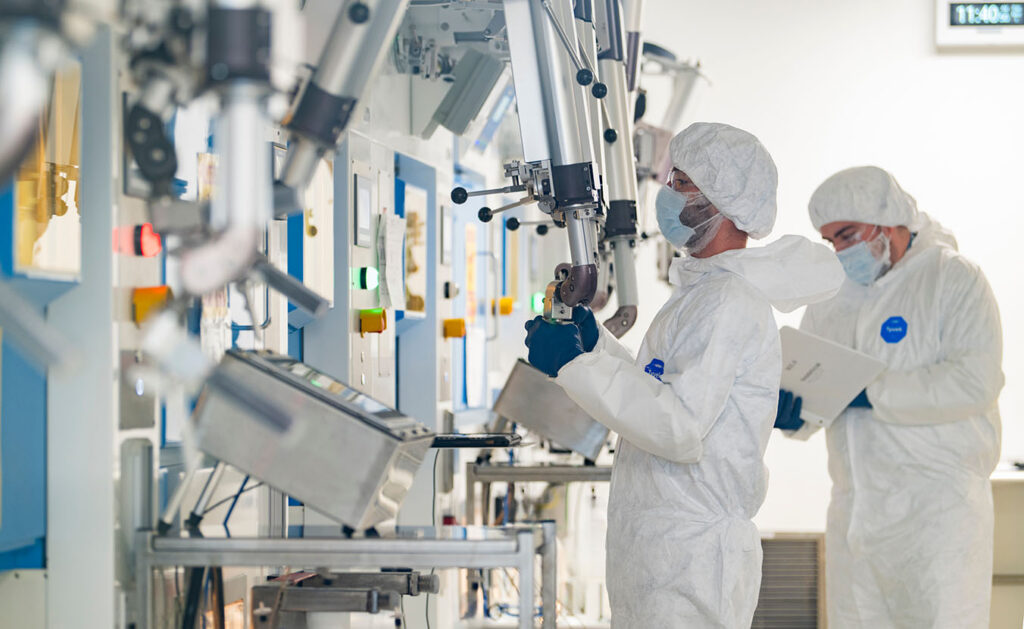
Building on SHINE’s radiochemistry expertise, Cassiopeia produces Ilumira, our non-carrier-added lutetium-177 (Lu-177) for cancer treatment. Its high purity supports consistent dosing and reliable performance for radiopharmaceutical manufacturers.
WASTE-TO-VALUE TECHNOLOGY
Turning nuclear waste back into a resource
Our recycling technology builds on the separation chemistry we developed for isotope production. We plan to next apply it to used nuclear fuel. We’ve tested key separation steps with Argonne National Laboratory and are developing a process to recover uranium and plutonium for reuse, along with valuable isotopes and metals. A subsequent step would use fusion to transform the remaining long-lived waste into shorter-lived forms. This would also generate gigawatt-scale thermal energy for electricity production.
Our path to fusion
From fusion-driven systems to commercial fusion power
Recycling will take our fusion technology to much higher power levels while building the capabilities needed for fusion energy. From there, the next step is standalone fusion power: using fusion reactions themselves to generate electricity at commercial scale.
By the Numbers
Fusion technology, proven in the real world
Designing, building and operating fusion systems
Fusion reactions per second — among the highest steady-state fusion outputs in the world
Patents and patent applications protecting our fusion and separation technology
FACILITIES
One platform, multiple facilities
We develop the technology, build it ourselves, deliver the projects, and operate them commercially. Every SHINE facility runs on these four capabilities.
Janesville, Wisconsin
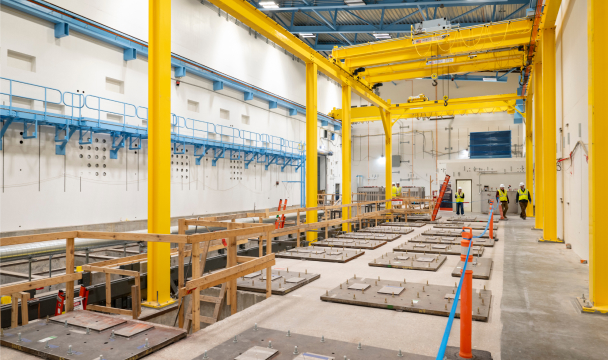
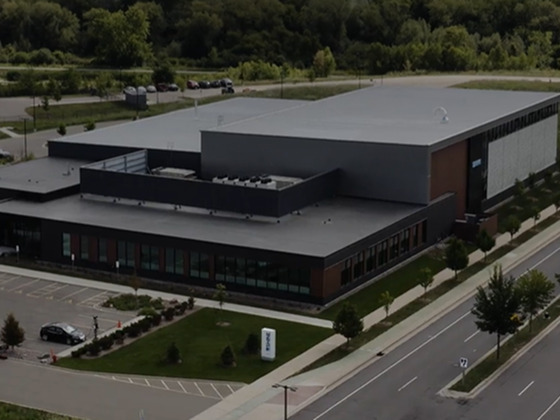
Once complete, we expect Chrysalis to be among the largest medical isotope production facilities of molybdenum-99 (Mo-99) in the world. Producing it in the U.S. with fusion-driven technology, our facility will close a supply gap left by end-of-life reactors overseas and ease real shortages for hospitals.
Janesville, Wisconsin
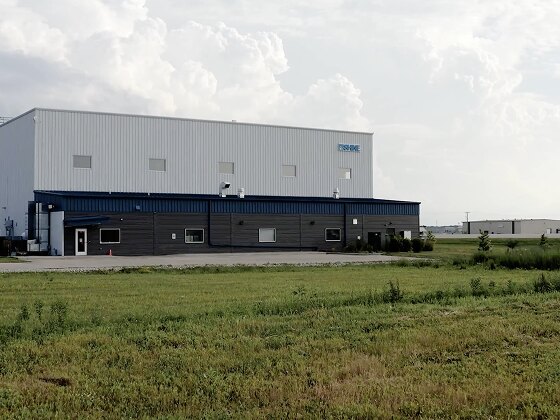
Cassiopeia produces Ilumira, our non-carrier-added lutetium-177 for cancer treatment. Ilumira’s consistently high quailty supports precise, reliable dosing for treatment programs worldwide.
Ilumira’s consistently high quailty supports precise, reliable dosing for treatment programs worldwide.
Fitchburg, Wisconsin
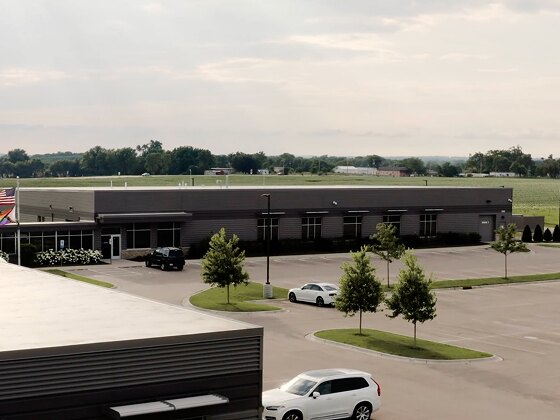
Heliopolis is our 47,500 square-foot manufacturing site in Fitchburg, Wis. This is where we design, build and test entire first-of-a-kind fusion systems. Electromagnets, ion sources, tritium handling equipment — if it doesn’t exist yet, we build it here.
Janesville, Wisconsin
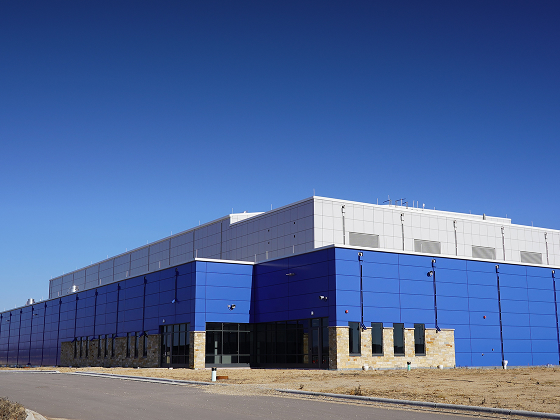
Building One runs our radiation effects testing system at approximately 46 trillion fusion reactions per second. Aerospace and defense customers test how their electronics hold up under radiation here, while our radiochemists develop the separation science behind our isotopes and fuel recycling.
Fitchburg, Wisconsin
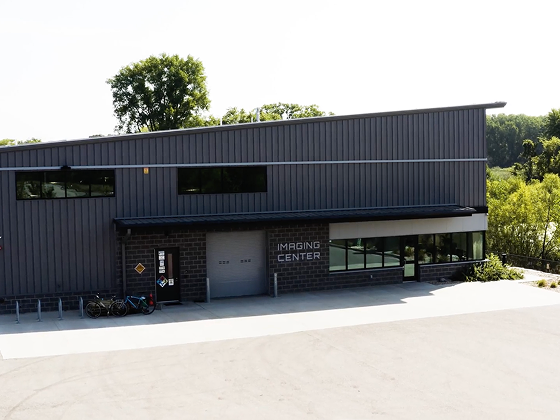
Our imaging center uses neutron radiography and CT to see inside components and catch flaws invisible to X-rays. We’re one of a limited number of commercial facilities worldwide that can do this without relying on a nuclear reactor.
North Billerica, Massachusetts
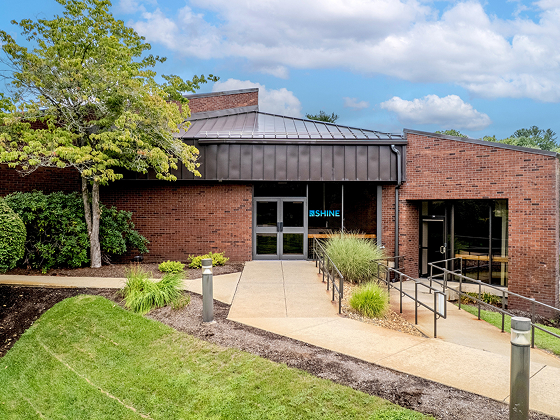
Our Isotope Delivery Campus produces and distributes SPECT imaging agents that support millions of diagnostic procedures annually for cardiac, pulmonary, thyroid and other applications for hospitals and imaging centers across North America.